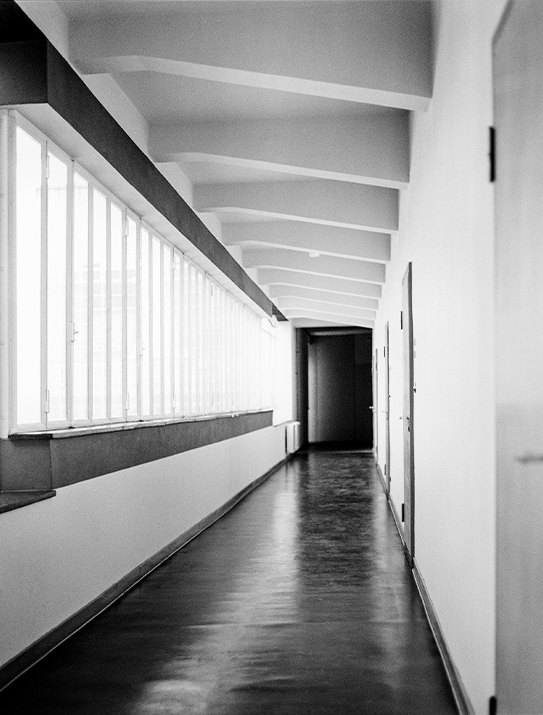
Inspiration: Bauhaus

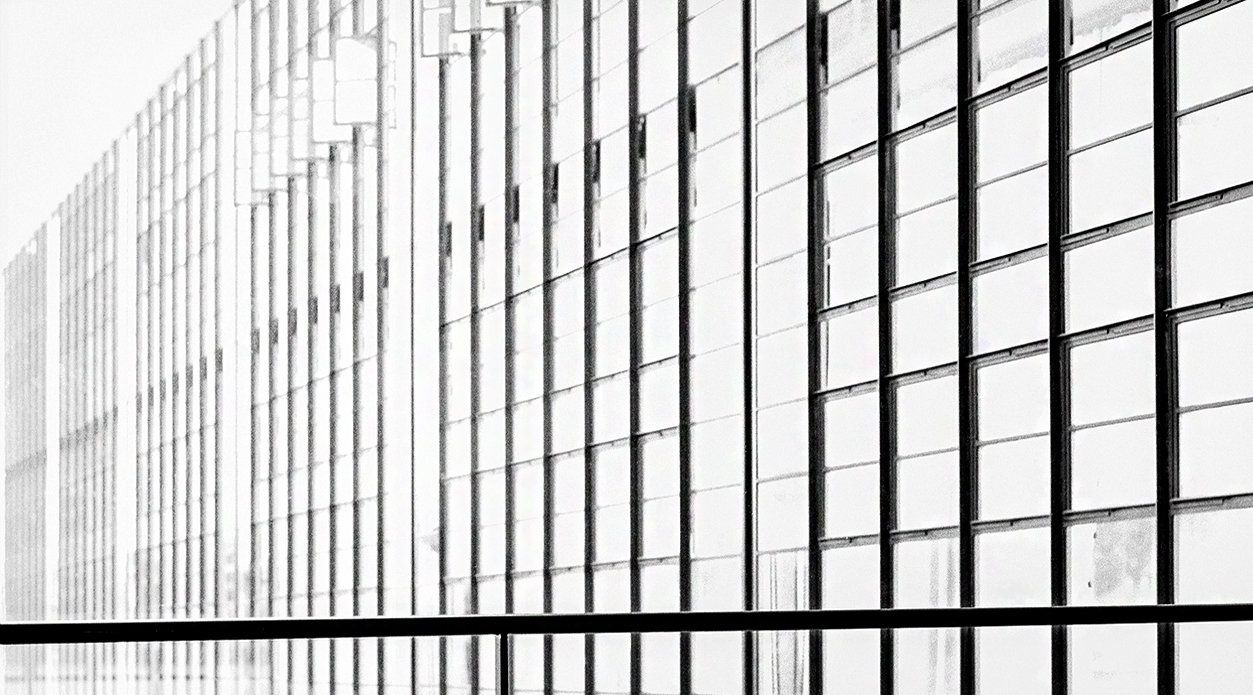
Founded in Weimar in 1919 by Walter Gropius, the Bauhaus was an active school of architecture, art, and design until 1933. Established as a place of experimentation, the school made an ideal fusion between art and crafts, embracing the challenges and the needs of industrial production and combining aesthetics and functionality in a new language.
The teachings of the school did not exclude any art or profession, from painting and sculpture to weaving, furnishings, and graphic design. Yet, at the center of the teaching, there was architecture and its principles: geometry, rigor, purity, functionality. Today the Bauhaus is considered to be one of the most influential and significant expressions of the modern movement worldwide and a point of reference for all subsequent generations of architects, designers, and artists.
Starting from the principles of this movement, the German photographer Stefan Berg describes the Bauhaus building in Dessau, designed by Gropius himself, where the school moved from 1925 to 1932. His photographic contribution opens up an unprecedented contemporary perspective on the aesthetics of functionalism.
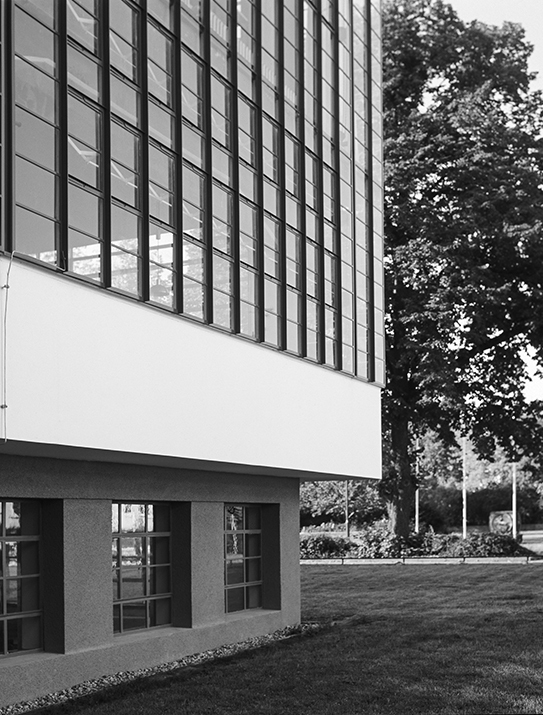
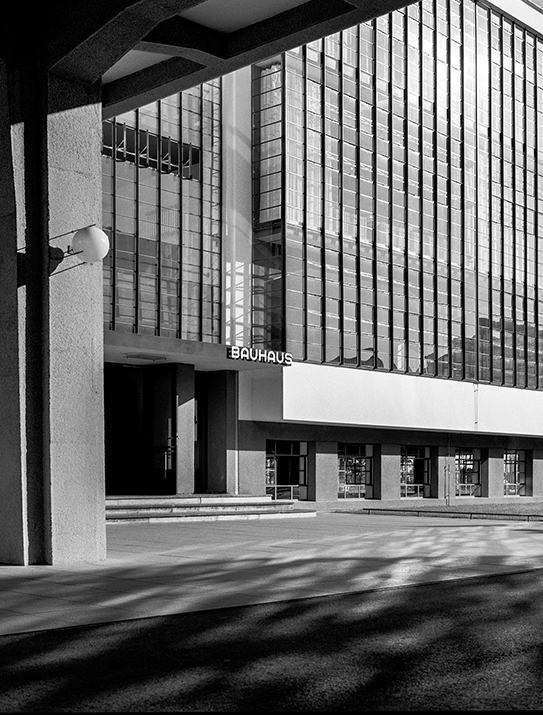

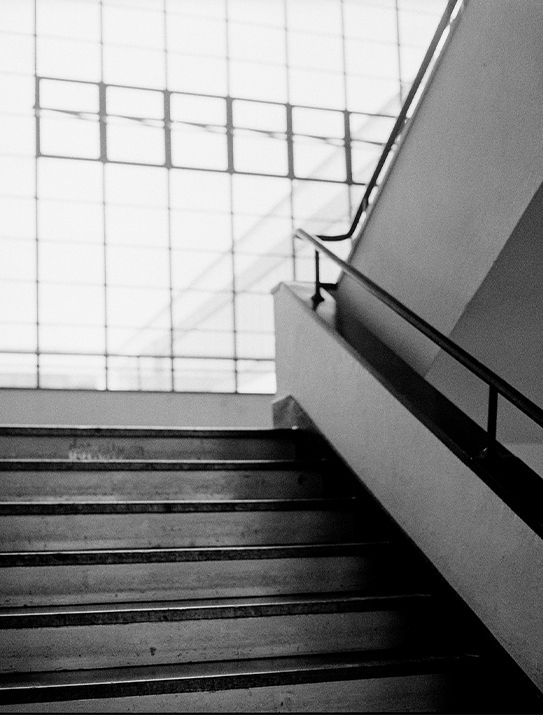
Berg guides the observer on an imaginary path, inside and outside the building, which allows you to observe the elementary themes of this movement: light, proportion, surface, space, and materiality.
The artist's mission is to illustrate the very idea of the Bauhaus, making it tangible through the photographic medium. With a contemporary look, Berg investigates how the principles of the school are manifested in the Dessau building and how artistic form and technological functionality can be considered a new unique entity.